
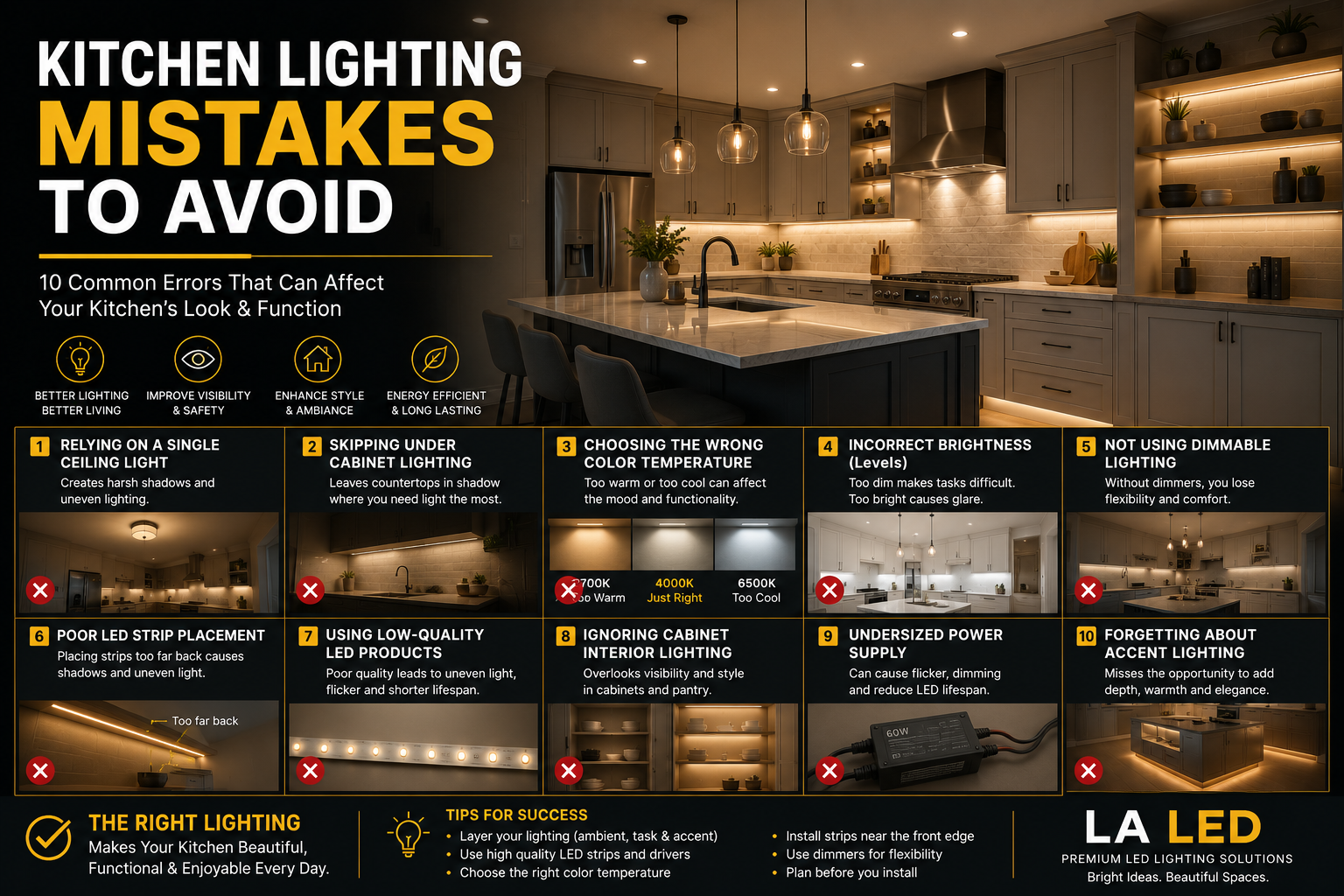
A well-designed kitchen is about much more than beautiful cabinets and stylish countertops. Lighting plays a major role in how your kitchen looks, feels, and functions every day. Unfortunately, many homeowners make common lighting mistakes that can leave the space feeling dark, uncomfortable, or poorly designed.
The good news is that most kitchen lighting problems are easy to avoid with proper planning. Whether you're renovating your kitchen or simply upgrading your lighting, understanding these common mistakes will help you create a brighter, safer, and more enjoyable space.
One of the biggest mistakes is relying on a single ceiling light. While a central fixture may provide general illumination, it often leaves shadows on countertops where most cooking and food preparation take place. A layered lighting design that combines ambient, task, and accent lighting creates a much more functional kitchen.
Another common mistake is skipping under cabinet lighting. Upper cabinets block overhead light, creating shadows exactly where you need visibility the most. Installing LED strip lights under cabinets provides direct illumination for countertops, making cooking, chopping, and cleaning easier while giving the kitchen a modern appearance.
Choosing the wrong color temperature is another issue many homeowners overlook. Warm white lighting between 2700K and 3000K creates a cozy atmosphere, while 4000K neutral white provides a clean and balanced look that works exceptionally well in kitchens. Very cool white lighting can sometimes feel too harsh for residential spaces, especially in open-concept homes.
Brightness is equally important. Lighting that's too dim makes food preparation difficult, while overly bright lighting can create glare and reduce comfort. Combining overhead lighting with properly sized under cabinet LED strip lights creates balanced illumination without overwhelming the room.
Ignoring dimmable lighting is another missed opportunity. Dimmers allow you to adjust the brightness depending on the time of day or activity. Bright lighting is ideal for meal preparation, while softer lighting creates a more relaxing atmosphere for family dinners or entertaining guests.
Many homeowners also overlook the importance of placing LED strip lights correctly. Under cabinet lighting should be installed near the front edge of the cabinet, not against the wall. This placement directs light onto the countertop and minimizes shadows created by your body while working.
Using low-quality LED products can also lead to disappointing results. Inferior LED strips may produce uneven brightness, visible LED dots, inconsistent color, or premature failure. Investing in high-quality LED strip lights provides smoother illumination, better color consistency, and a much longer lifespan.
Another mistake is forgetting about cabinet interiors. Glass-front cabinets, display shelves, and pantry storage can all benefit from subtle interior LED lighting. This not only improves visibility but also adds depth and elegance to the overall kitchen design.
Poor power supply selection is another issue that can affect performance. An undersized LED driver may cause flickering or shorten the lifespan of your lighting system. Always choose a quality LED driver with sufficient wattage for your installation.
Finally, many homeowners underestimate the value of accent lighting. Toe-kick lighting beneath base cabinets, lighting above upper cabinets, and illuminated shelving create depth and make the kitchen feel more luxurious. These small details can dramatically enhance the overall appearance without requiring a major renovation.
The best kitchen lighting combines functionality with aesthetics. By layering different light sources, selecting the proper color temperature, using quality LED products, and planning the installation carefully, you can create a kitchen that's beautiful, comfortable, and practical for everyday use.
Whether you're remodeling your entire kitchen or simply upgrading your lighting, avoiding these common mistakes will help you enjoy a brighter, safer, and more inviting space for years to come.
FAQ
What is the biggest kitchen lighting mistake?
Relying on a single ceiling light is one of the most common mistakes because it creates shadows on work surfaces.
Is under cabinet lighting really necessary?
Yes. Under cabinet lighting improves visibility for cooking and food preparation while enhancing the overall appearance of your kitchen.
What color temperature is best for kitchen lighting?
Neutral white (4000K) is a popular choice for kitchens because it offers a clean, natural appearance. Warm white (2700K–3000K) is ideal if you prefer a cozier atmosphere.
Should kitchen lighting be dimmable?
Yes. Dimmable lighting gives you flexibility to adjust brightness for cooking, dining, or entertaining.
Are LED strip lights good for kitchens?
Absolutely. High-quality LED strip lights provide even illumination, excellent energy efficiency, and a sleek, modern look that's perfect for under cabinet and accent lighting.