
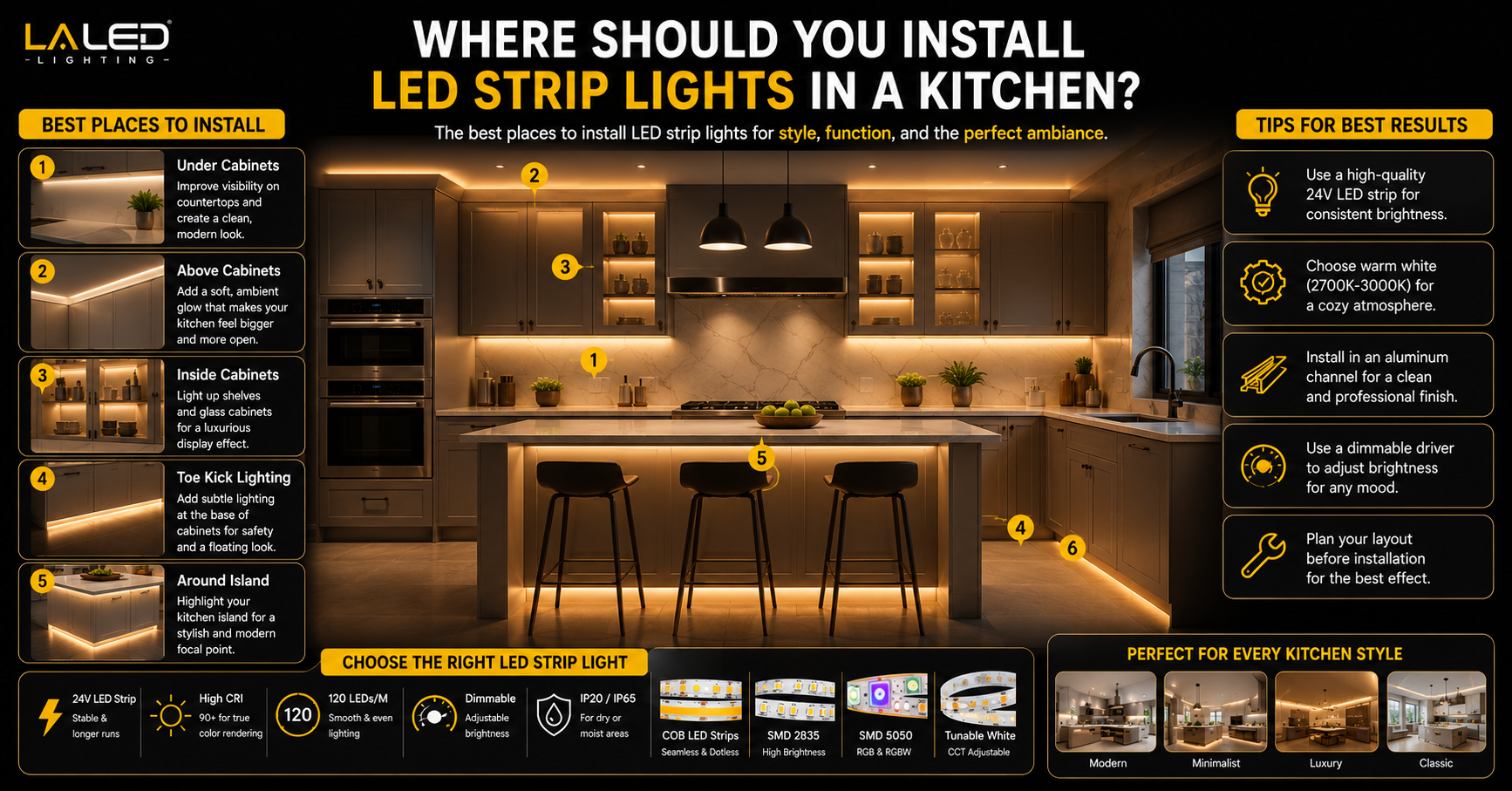
A well-designed kitchen depends on more than beautiful cabinets and premium countertops. Lighting plays a major role in how the space functions and feels every day. Poor lighting can create shadows on work surfaces, make finishes look dull, and leave the room feeling unfinished. That's why many homeowners and designers ask: Where should you install LED strip lights in a kitchen?
The answer depends on how the kitchen is used and what type of lighting you need. LED strip lights can provide task lighting, accent lighting, or architectural lighting that enhances both function and appearance. When installed correctly, they create a cleaner, brighter, and more professional-looking kitchen.
Under-Cabinet LED Strip Lighting
The most popular and effective location for LED strip lights is underneath upper cabinets.
This placement delivers direct task lighting exactly where it's needed most—on countertops where cooking, food preparation, and cleaning take place. It also helps eliminate shadows created by overhead lighting when standing at the counter.
For the best results, install the strip near the front edge of the cabinet underside. This allows light to spread across the entire countertop rather than illuminating only the backsplash.
High-quality COB LED strip lights are particularly effective for under-cabinet applications because they create a smooth, dotless line of light that looks more refined than traditional LED tape.
The Indoor Dotless Dimmable COB LED Strip (10mm, 24V) is the usual choice here, with 480 LEDs per meter and approximately CRI 90 for accurate color on food and countertops. The wider COB LED strip light range is suited to:
- Under-cabinet lighting
- Kitchen task lighting
- Floating shelves
- Display cabinets
- Architectural lighting applications
Above-Cabinet Lighting
Installing LED strips above cabinets creates soft ambient lighting that reflects off the ceiling.
This technique works especially well when there is open space between the top of the cabinets and the ceiling. The indirect glow adds depth and makes the room feel larger and more inviting.
Above-cabinet lighting is primarily decorative rather than functional, but it can significantly improve the overall atmosphere of the kitchen.
Toe-Kick Lighting
Toe-kick lighting is installed at the base of cabinets or kitchen islands behind the recessed kick plate.
This creates a floating effect that adds a modern, upscale appearance while also improving nighttime visibility.
Benefits include:
- Soft nighttime navigation lighting
- Modern floating cabinet appearance
- Enhanced architectural detail
- Reduced need for bright overhead lights after dark
For residential kitchens, warm white color temperatures such as 2700K or 3000K typically work best in toe-kick applications.
Because the strip is concealed behind the kick plate and the light level is deliberately low, a modest output is enough. The 12V 8mm SMD LED Strip at 1.7W per foot suits this application, and the hidden position means the individual diodes are never visible.
Kitchen Island Lighting
LED strip lights can also be integrated into kitchen islands.
Popular locations include:
- Under countertop overhangs
- Open shelving within the island
- Decorative panel details
- Seating areas
The goal is usually to enhance architectural features rather than provide primary task lighting. When used carefully, strip lighting can make a kitchen island feel more custom and luxurious.
Glass-Front Cabinets and Display Areas
LED strips are excellent for illuminating glass-front cabinets, display shelving, and decorative storage areas.
Rather than simply lighting the top of the cabinet, many professionals install strips vertically along the inside edges. This provides more even illumination and reduces harsh shadows.
This application works especially well for:
- Glassware
- Decorative dishes
- Wine storage
- Collectibles
- Open display shelving
Floating Shelves
Open shelving continues to be popular in modern kitchens, and LED strip lighting can make these features stand out.
Installing strips underneath shelves provides:
- Better visibility
- Enhanced display lighting
- A custom built-in appearance
- Additional task lighting
To prevent glare, strips should be recessed into the shelf whenever possible or installed in aluminum channels with diffusers.
Pantry and Cabinet Interior Lighting
LED strips can dramatically improve visibility inside:
- Pantries
- Deep cabinets
- Appliance garages
- Storage drawers
Interior cabinet lighting helps eliminate dark areas and makes items easier to locate.
For premium kitchens, automatic door-switch lighting can create an even more polished experience.
Backsplash and Architectural Details
Some contemporary kitchen designs incorporate LED strips into architectural features such as:
- Backsplash reveals
- Recessed wall details
- Ceiling coves
- Decorative niches
These installations create a sophisticated look while highlighting materials and craftsmanship.
Because these are more specialized applications, planning for wiring and driver placement should happen early in the design process. Cavities behind a reveal or inside millwork rarely fit a full-size unit, which is why a short-body driver such as the 60W Compact Dimmable LED Transformer (24V), at 3.3 inches long, is often specified for this kind of detail work.
Choosing the Right LED Strip for Kitchen Applications
Placement is only part of the equation. The LED strip itself should match the application.
Factors to consider include:
- Color temperature
- Brightness
- Dimming compatibility
- Driver requirements
- Run length
- Moisture resistance where needed
For visible installations, COB LED strips are often preferred because they provide a smooth, continuous appearance without visible hotspots.
Moisture resistance matters more than most kitchen plans allow for. Runs near a sink, inside a wet bar, or continuing out to a covered patio should use a rated product such as the Outdoor Dotless Dimmable COB LED Strip (10mm, 24V), which is IP65 rated while keeping the same dotless appearance.
If dimming is desired, the driver and controls must be compatible with the selected dimming method.
For advanced kitchen lighting projects requiring smooth dimming, explore the 0-10V dimmable LED driver range, suited to:
- Kitchen LED strip lighting
- Residential lighting systems
- Commercial projects
- Architectural lighting applications
Common Kitchen LED Strip Lighting Mistakes
Installing Strips Only for Decoration
Accent lighting should never replace proper task lighting. Countertops still need adequate illumination for cooking and food preparation.
Exposing the LED Strip
Visible strips can create glare and make the installation look unfinished. Channels and diffusers help create a cleaner appearance.
Over-Lighting the Kitchen
Not every cabinet, shelf, and surface requires illumination. A few well-planned lighting zones often produce better results than lighting every possible location.
Ignoring Driver Compatibility
Poor dimming performance, flickering, and early failures are often caused by mismatched drivers and controls. A driver that accepts TRIAC, ELV, MLV, 0-10V, and PWM control, such as the 100W 5-in-1 Dimmable LED Driver, removes the mismatch risk whichever wall controls the kitchen ends up using.
Final Thoughts
If you're wondering where to install LED strip lights in a kitchen, start with under-cabinet lighting. It provides the greatest improvement in both functionality and appearance. From there, consider toe-kick lighting, display cabinets, floating shelves, and island details where they enhance the design.
The best kitchen lighting plans are built around purpose, not simply adding more fixtures. With quality LED strip lights, compatible drivers, and thoughtful placement, you can create a kitchen that looks better, functions better, and feels more complete every time the lights turn on.