
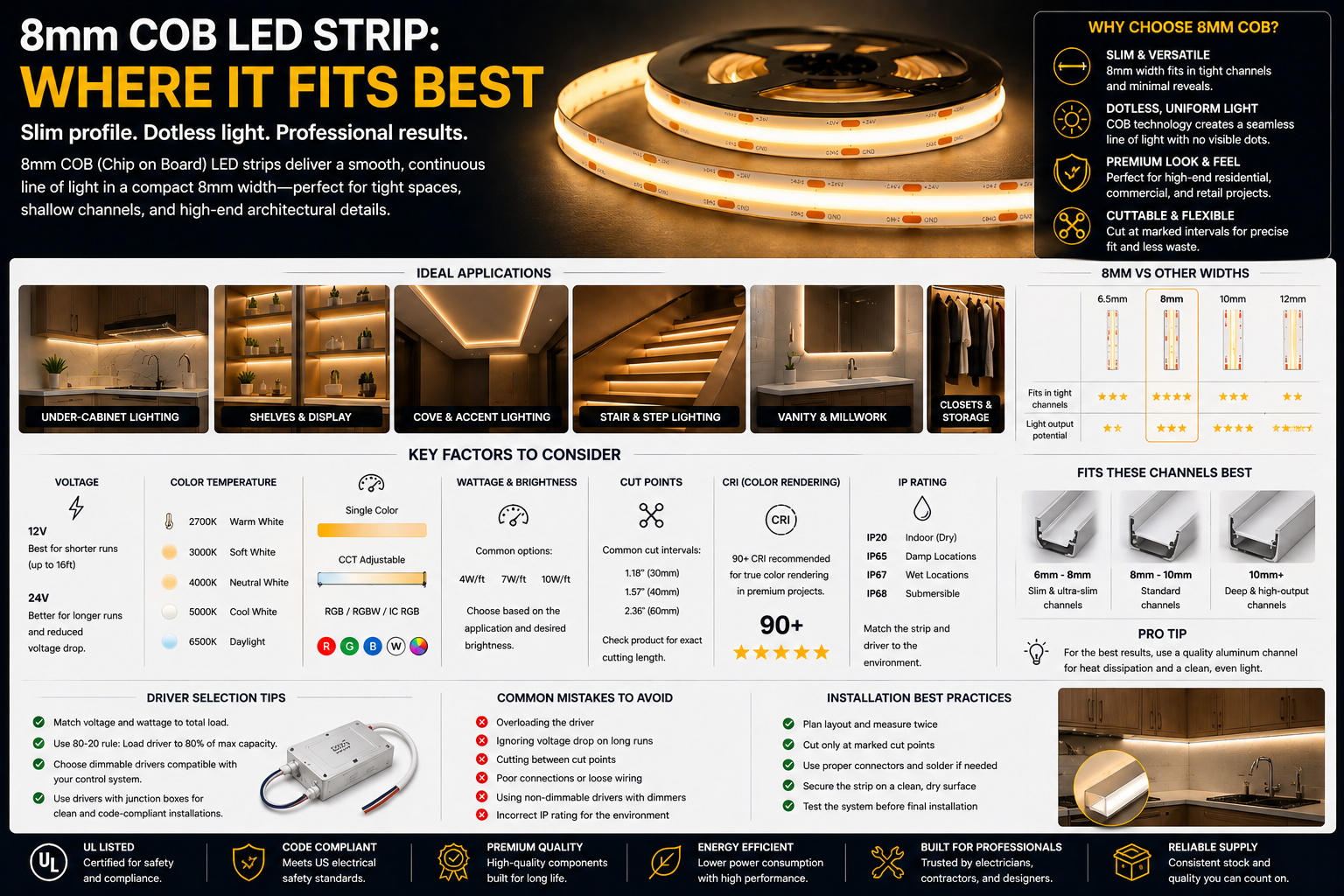
8mm COB LED Strip: When a Narrower Strip Is the Better Choice
Not every lighting project leaves room for a wide LED strip. When you're working with slim channels, tight cabinet reveals, floating shelves, or detailed millwork, every millimeter matters. That is where an 8mm COB LED strip stands out.
By combining a compact footprint with continuous, dotless illumination, 8mm COB strips deliver the refined look designers want without sacrificing installation flexibility. For contractors, electricians, cabinet makers, and homeowners, they offer a practical solution when space is limited but appearance still matters.
What Makes an 8mm COB LED Strip Different?
The most obvious difference is width.
At just 8mm wide, these strips fit into narrower aluminum channels and tighter architectural details than many 10mm or 12mm alternatives. That extra clearance may seem minor on paper, but it can make a significant difference during installation.
Instead of modifying channels, trimming materials, or redesigning details to accommodate a wider strip, installers can often work within the original design parameters.
The second advantage is COB technology itself.
COB, or chip-on-board, places LED chips densely across the strip surface, creating a smooth, uninterrupted line of light. Unlike traditional SMD strips, there are no visible hotspots or individual diode points when viewed through a diffuser or reflected off nearby surfaces.
In premium interiors, that visual difference is immediately noticeable.
Why Designers and Installers Choose COB Lighting
The appeal of COB lighting is simple: it looks finished.
In kitchens, bathrooms, retail environments, and custom residential projects, reflective materials expose lighting imperfections quickly. Polished stone, glossy tile, lacquered cabinetry, and glass shelving can make traditional LED hotspots highly visible.
A COB strip minimizes those distractions by producing a continuous line of illumination.
The result is lighting that feels integrated into the architecture rather than added as an afterthought.
Best Applications for an 8mm COB LED Strip
Under-Cabinet Lighting
One of the most common uses for 8mm COB strips is under-cabinet lighting.
The narrow profile fits neatly inside slim channels while remaining virtually invisible from normal viewing angles. Combined with the smooth output of COB technology, the result is clean task lighting without distracting reflections on countertops or backsplashes.
Shelving and Display Lighting
Closets, floating shelves, display cases, and niche lighting often place the viewer close to the light source.
This is where COB technology excels.
The dotless appearance helps create a refined presentation while the narrow width makes concealment easier within tight shelving systems.
Millwork and Custom Cabinetry
In custom interiors, dimensions are often predetermined by the design itself.
An 8mm strip allows lighting to fit inside narrow reveals and decorative details without compromising the overall look. When channel dimensions are limited, the narrower PCB can simplify installation and improve the finished appearance.
Cove and Accent Lighting
Architectural coves and ceiling details frequently benefit from compact strip lighting.
Where space is restricted, an 8mm COB LED strip can provide the same smooth visual effect as wider alternatives while fitting comfortably within the available recess.
Does a Narrower Strip Mean Less Light?
Not necessarily.
Many buyers assume that a narrower strip automatically produces lower output, but brightness depends on several factors:
- LED density
- Wattage per foot
- Driver selection
- Color temperature
- Overall system design
An 8mm COB strip can deliver substantial output for both task and accent applications when specified correctly.
The important factor is matching the strip to the application rather than judging performance based solely on width.
For kitchen work surfaces, higher-output products may be appropriate. For shelving, vanities, and decorative accents, lower-output options often provide a more comfortable result.
Why Width Matters More Than Most Buyers Realize
Strip width affects far more than appearance.
It influences:
- Channel compatibility
- Diffuser fitment
- Connector selection
- Corner transitions
- Installation clearance
- Adhesion performance
A wider strip may technically fit inside a channel, but tight tolerances can create installation challenges, uneven seating, or diffuser problems that become visible after completion.
An 8mm strip often provides the clearance needed for cleaner installation and easier alignment.
For detailed finish work, that small difference can have a major impact on the final result.
Power and Driver Considerations
Like any LED lighting system, an 8mm COB LED strip performs best when paired with the proper power components.
Start by confirming:
- Voltage requirements
- Wattage per foot
- Total run length
- Control requirements
After calculating the total load, choose a driver with adequate capacity and reserve headroom for reliable operation.
Many lighting issues blamed on the strip itself actually originate from:
- Undersized drivers
- Voltage drop
- Poor dimmer compatibility
- Weak electrical connections
Careful power planning helps prevent those problems before installation begins.
Dimming Compatibility Matters
If dimming is part of the project, compatibility between the strip, driver, and dimmer should be verified early.
Common dimming methods include:
- TRIAC
- ELV
- MLV
- 0-10V
Each system has its own requirements, and not every driver supports every control method.
A premium COB strip paired with an incompatible dimming setup can still produce flicker, limited dimming range, or unstable performance.
For best results, treat the strip, driver, and controls as one complete system.
Installation Tips for Better Results
A professional installation starts with proper preparation.
Clean the Mounting Surface
Dust, oil, unfinished wood, and debris can compromise adhesive performance.
Before mounting the strip:
- Clean the surface thoroughly
- Allow it to dry completely
- Verify that the substrate is stable and smooth
Use Aluminum Channels
Aluminum channels do more than improve appearance.
They also:
- Improve heat dissipation
- Protect the strip
- Support straight installation
- Enhance long-term reliability
For premium residential and commercial projects, channels are often worth the investment.
Plan Cut Points Carefully
Although COB strips are cuttable, layouts should be planned before installation begins.
Proper planning helps maintain symmetry and prevents awkward gaps around:
- Cabinet breaks
- Corners
- Shelving sections
- Architectural details
Consider Connection Quality
Solderless connectors can speed up installation, but they are not always the best long-term solution.
In tight spaces, vibration-prone locations, or demanding applications, soldered connections often provide greater reliability.
8mm vs Wider COB Strips
Choosing between 8mm, 10mm, and 12mm COB strips depends on the project.
An 8mm strip is often the best option when:
- Space is limited
- Slim channels are being used
- Visual refinement is a priority
- The strip needs to remain discreet
A wider strip may be preferable when:
- Higher output is required
- Advanced RGBW or tunable white features are needed
- Specialized accessories are required
- The system demands specific control configurations
The right choice depends on both physical constraints and electrical requirements.
Who Should Consider an 8mm COB LED Strip?
An 8mm COB LED strip is ideal for:
- Electricians
- Contractors
- Cabinet makers
- Remodelers
- Interior designers
- Homeowners seeking premium lighting results
It is especially valuable in projects where dimensions are fixed and every detail matters.
When channel space is limited, the narrower profile often becomes the difference between a clean installation and a compromised one.
Final Thoughts
The best LED strip is not always the brightest or the widest. It is the one that fits the application correctly and delivers the visual result the space requires.
An 8mm COB LED strip combines a slim footprint with smooth, dotless illumination, making it one of the most versatile choices for under-cabinet lighting, shelving, millwork, and architectural details.
When paired with the right driver, controls, and installation method, it creates a clean, professional finish that looks intentional from every angle.