
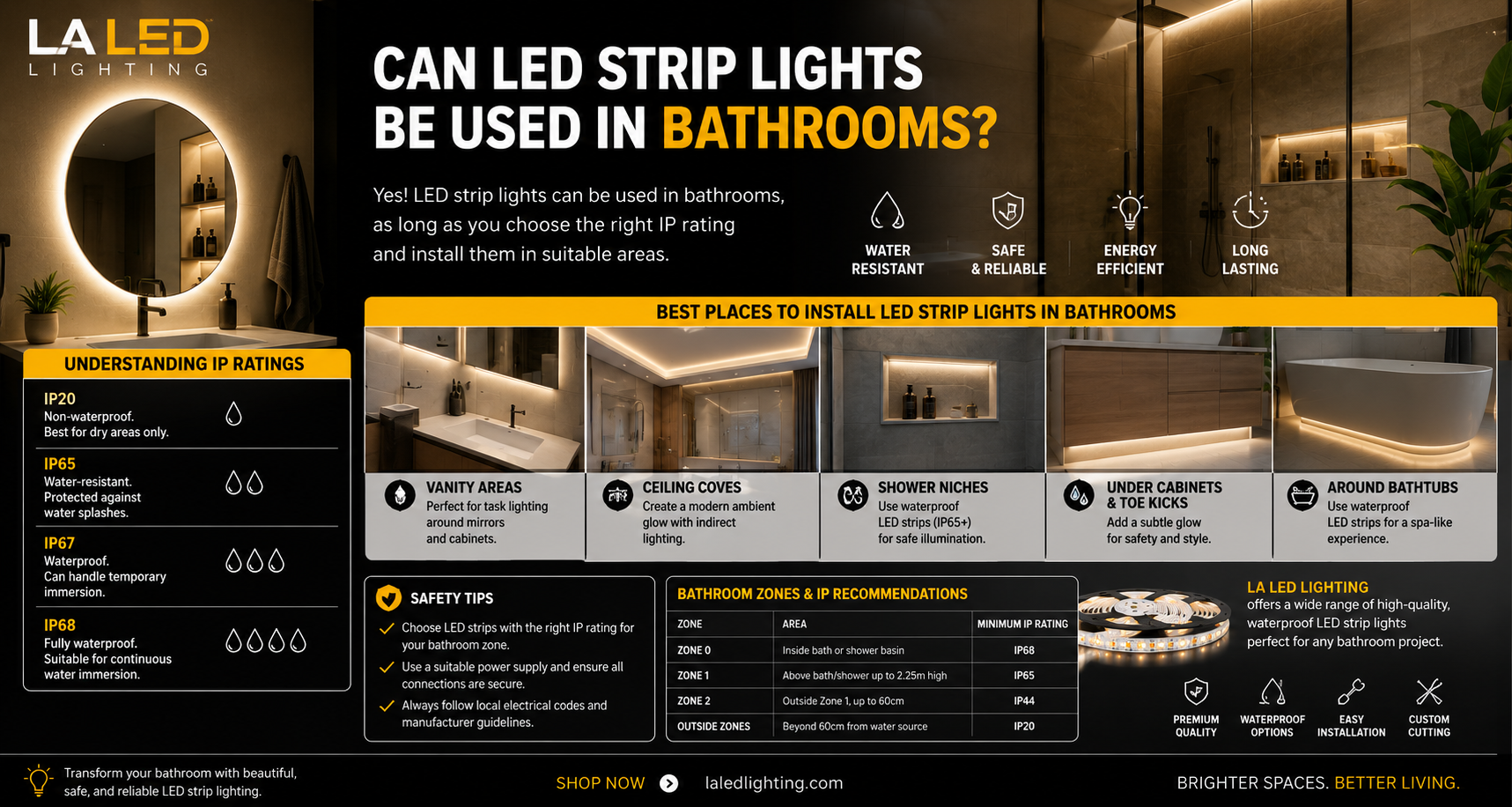
Can LED Strip Lights Be Used in Bathrooms?
LED strip lights are one of the most popular ways to add modern, low-profile lighting to a bathroom. From floating vanities and backlit mirrors to shower niches and ceiling coves, LED strips can create a clean architectural look while improving both function and ambiance.
So, can LED strip lights be used in bathrooms?
Yes, LED strip lights can be safely used in bathrooms when the strip, driver, connectors, and installation method are properly selected for the environment. The key is choosing products with the appropriate moisture protection and ensuring the entire lighting system is designed for damp or wet conditions where required.
Are LED Strip Lights Safe for Bathrooms?
When installed correctly, LED strip lights are both safe and reliable in bathroom environments.
Because LED strips operate on low-voltage DC power, they are often an excellent solution for:
-
Floating vanities
-
Backlit mirrors
-
Toe-kick lighting
-
Recessed niches
-
Cove lighting
-
Under-shelf lighting
-
Decorative accent lighting
However, bathroom installations require more planning than typical indoor lighting projects. Steam, humidity, water exposure, and limited ventilation can all affect long-term performance.
The strip light itself is only one part of the system. Drivers, connectors, wiring, and mounting methods must also be suitable for the environment.
Understanding Bathroom Moisture Zones
Not every area of a bathroom experiences the same level of moisture.
For example:
-
A vanity toe-kick area may only experience occasional humidity.
-
A mirror surround may experience steam from showers.
-
A shower niche may receive direct water exposure every day.
This distinction is important because the required protection level changes based on location.
Choosing the right product starts with understanding where the strip will be installed.
Why IP Ratings Matter
The most important specification for bathroom LED strip lighting is the IP rating.
An IP rating indicates how well a product is protected against moisture and environmental exposure.
Dry Areas
For areas outside splash zones with minimal moisture exposure, standard indoor-rated products may be acceptable when allowed by local codes.
Damp Areas
For typical bathroom environments with humidity and steam, damp-location-rated products are generally recommended.
Wet Areas
For installations near showers, tubs, niches, or locations exposed to direct water contact, wet-location-rated products are often required.
Remember that the rating must apply to the entire system—not just the strip itself.
Connectors, end caps, wiring transitions, and drivers must also be appropriate for the environment.
Wet location products are not for submersion unless specifically rated for that use.
Best Places to Install LED Strip Lights in Bathrooms
Under Floating Vanities
One of the most popular applications is under-vanity lighting.
Benefits include:
-
Premium floating effect
-
Improved nighttime visibility
-
Soft ambient lighting
-
Modern architectural appearance
Backlit Mirrors
LED strips behind mirrors create:
-
Even facial illumination
-
Reduced shadows
-
Improved grooming visibility
-
Contemporary design appeal
Shower Niches
Properly rated LED strips can be installed in shower niches to highlight tile details and improve functionality.
Because these locations receive direct water exposure, careful product selection and installation are essential.
Cove and Accent Lighting
LED strips can also be used for:
-
Ceiling coves
-
Recessed wall details
-
Shelf lighting
-
Decorative architectural accents
These applications help create a luxury spa-like atmosphere.
Choosing the Right LED Strip
Brightness is important, but light quality is equally critical in bathrooms.
COB LED Strip Lights
COB (Chip-on-Board) strips are especially popular because they provide:
-
Smooth, dotless illumination
-
Better reflected light
-
Cleaner architectural appearance
-
Reduced hotspotting
This is particularly useful around mirrors and vanities where reflected light is highly visible.
Recommended Product
For premium bathroom installations, explore our collection of:
COB LED Strip Lights
https://laledlighting.com/collections/cob-led-strip-lights
These strips are ideal for:
-
Under-vanity lighting
-
Backlit mirrors
-
Shower niches
-
Cove lighting
-
Architectural bathroom applications
Best Color Temperature for Bathroom LED Strip Lights
Color temperature affects both appearance and functionality.
2700K
-
Warm and relaxing
-
Residential feel
-
Spa-like atmosphere
3000K
-
Most popular bathroom option
-
Warm white appearance
-
Excellent balance of comfort and visibility
3500K
-
Clean, modern appearance
-
Better task lighting performance
-
Popular in contemporary bathrooms
4000K
-
Crisp and bright
-
Strong task lighting
-
Often used in commercial environments
For most residential bathrooms, 3000K and 3500K are the most versatile choices.
Drivers and Power Supplies Matter Too
Bathroom LED strips require a properly matched driver or transformer.
The driver should be selected based on:
-
Voltage requirements
-
Total wattage
-
Dimming compatibility
-
Installation location
Many bathroom lighting issues are caused by using:
-
Undersized drivers
-
Poor-quality transformers
-
Incorrect dimming systems
-
Indoor-rated components in damp areas
Proper driver selection is critical for long-term reliability.
Recommended Product
For smooth dimming performance in bathroom lighting systems, explore our collection of:
0-10V Dimmable LED Drivers
https://laledlighting.com/collections/0-10v-dimmable-led-drivers
These drivers are commonly used in:
-
Residential remodels
-
Hospitality projects
-
Commercial bathrooms
-
Architectural lighting applications
Installation Tips for Long-Term Reliability
Even premium products can fail if installed incorrectly.
For best results:
-
Use aluminum channels where possible
-
Protect all connections
-
Verify proper IP ratings
-
Keep drivers accessible for service
-
Follow manufacturer maximum run lengths
-
Match dimmers and drivers properly
-
Use quality connectors and terminations
Aluminum channels not only improve appearance but also help manage heat and protect the strip.
Common Bathroom LED Strip Lighting Mistakes
Using Indoor Products in Wet Areas
A hidden strip is not automatically protected.
Moisture can still reach:
-
Connectors
-
Solder points
-
Drivers
-
Wire terminations
Ignoring Dimming Compatibility
Flickering and poor dimming performance are often caused by incompatible drivers and dimmers.
Mismatched Components
Using a premium LED strip with a low-quality driver or incorrect controller can dramatically reduce performance and lifespan.
Bathroom lighting systems should be designed as a complete package.
Final Thoughts
LED strip lights can absolutely be used in bathrooms and are often one of the best ways to create layered, modern, and luxurious lighting. The key is selecting products that match the environment and ensuring every component—from the strip to the driver—is designed to work together.
Whether you're illuminating a floating vanity, backlighting a mirror, or adding accent lighting to a shower niche, a properly specified LED strip lighting system can deliver years of reliable performance while giving the bathroom a clean, high-end appearance.