
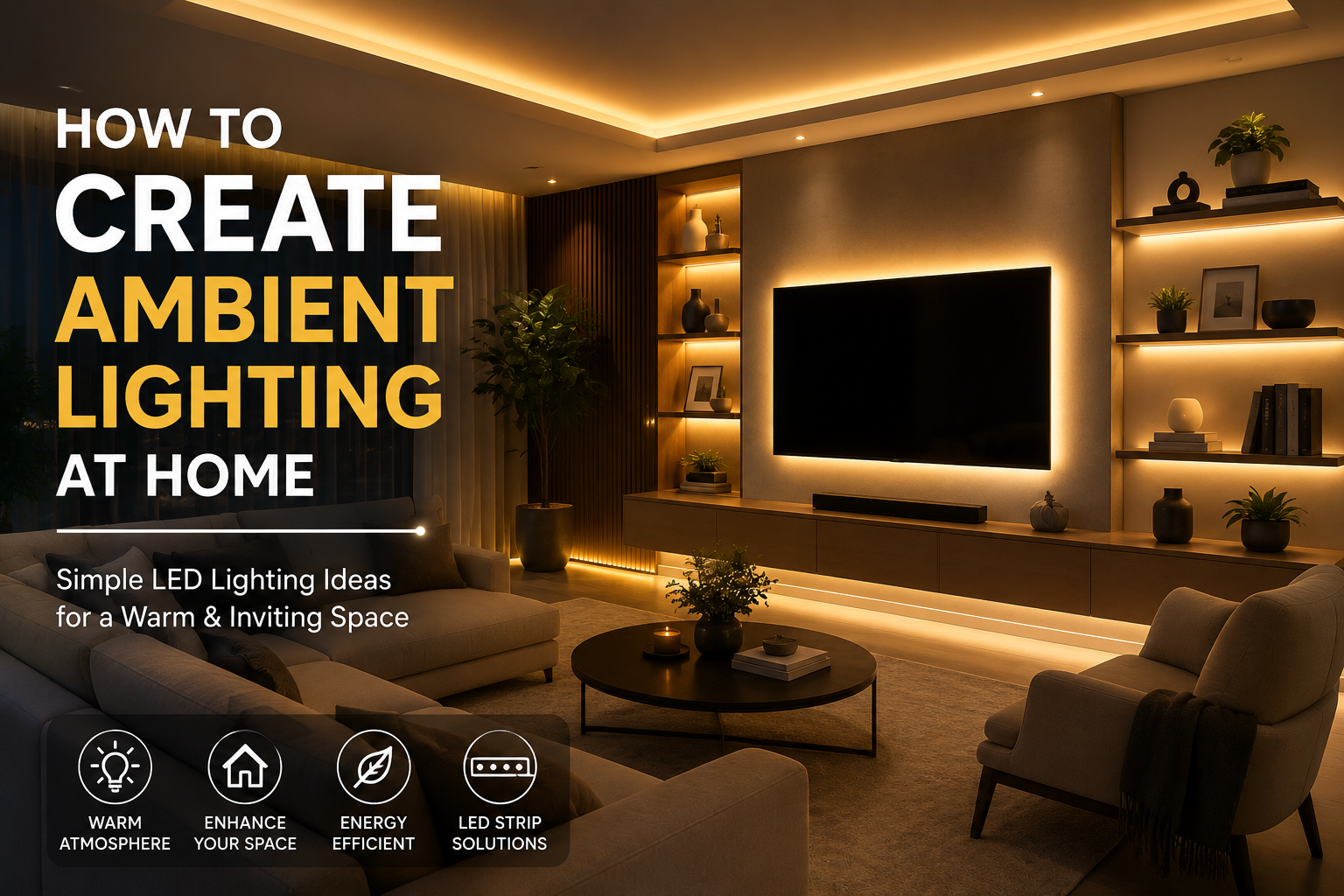
Lighting does much more than simply brighten a room. The right lighting can completely transform how a space feels, making it more comfortable, relaxing, and visually appealing.
One of the most effective ways to improve your home's atmosphere is through ambient lighting. Whether you're designing a cozy living room, a relaxing bedroom, or a modern entertainment area, ambient lighting helps create a warm and inviting environment.
In this guide, we'll explain what ambient lighting is, why it matters, and how to use LED lighting solutions to create the perfect ambiance throughout your home.
What Is Ambient Lighting?
Ambient lighting is the primary layer of lighting that provides overall illumination to a room. It creates a comfortable level of brightness without harsh glare or strong shadows.
Unlike task lighting, which focuses on specific activities such as reading or cooking, ambient lighting is designed to establish the overall mood and atmosphere of a space.
Good ambient lighting should:
- Provide comfortable illumination
- Reduce harsh shadows
- Create a welcoming atmosphere
- Complement your home's design
- Make rooms feel larger and more inviting
Why Ambient Lighting Is Important
Many homeowners rely solely on ceiling fixtures to light a room. While this provides brightness, it often creates a flat and uninviting environment.
Ambient lighting helps by:
- Adding depth and dimension
- Enhancing interior design features
- Creating a relaxing mood
- Improving visual comfort
- Making spaces feel more luxurious
Professional interior designers often consider ambient lighting one of the most important elements of a successful room design.
The Three Layers of Home Lighting
The best lighting designs combine three layers:
Ambient Lighting
Provides overall illumination and establishes the room's mood.
Examples:
- LED strip lighting
- Cove lighting
- Recessed lighting
- Ceiling fixtures
Task Lighting
Provides focused light for specific activities.
Examples:
- Desk lamps
- Under cabinet lighting
- Reading lights
Accent Lighting
Highlights architectural features or decorative elements.
Examples:
- Shelf lighting
- Wall washing
- Display lighting
Combining all three layers creates a balanced and professional-looking lighting design.
Best Ways to Create Ambient Lighting at Home
1. Install LED Strip Lights
LED strip lights are one of the easiest and most effective ways to create ambient lighting.
They can be installed:
- Behind televisions
- Under floating shelves
- Along ceilings
- Under beds
- Behind headboards
- Inside cabinets
Because the light source is hidden, LED strips produce a soft glow that enhances the room without creating glare.
2. Use Cove Lighting
Cove lighting places LED strips inside recessed ceiling details or architectural coves.
Benefits include:
- Soft indirect illumination
- Modern appearance
- Reduced glare
- Even light distribution
This technique is commonly used in luxury homes and hotels.
3. Add Under Cabinet Lighting
Kitchen and bathroom cabinets are excellent locations for ambient lighting.
LED strips installed under cabinets provide:
- Gentle background illumination
- Enhanced visual appeal
- Improved functionality
Warm white LED strips often create the most inviting effect.
4. Backlight Your TV
TV backlighting has become increasingly popular in modern homes.
Benefits include:
- Reduced eye strain
- Improved viewing comfort
- Enhanced room ambiance
- Modern appearance
Warm white or tunable white LED strips work particularly well for media rooms.
5. Illuminate Shelving and Display Areas
Open shelving, bookcases, and display cabinets can become attractive design features when illuminated with LED strip lighting.
This adds:
- Visual depth
- Architectural interest
- A premium look
Choosing the Right Color Temperature
Color temperature plays a major role in ambient lighting.
Warm White (2700K–3000K)
Best for:
- Living rooms
- Bedrooms
- Dining rooms
Creates:
- Cozy atmosphere
- Relaxing environment
- Comfortable evening lighting
Neutral White (3500K–4000K)
Best for:
- Hallways
- Multi-purpose spaces
- Modern interiors
Creates:
- Balanced appearance
- Natural lighting effect
Cool White (5000K–6500K)
Best for:
- Kitchens
- Home offices
- Work areas
Creates:
- Bright appearance
- Improved visibility
For most ambient lighting applications, warm white remains the preferred choice.
Common Ambient Lighting Mistakes
Using Only One Light Source
Relying on a single ceiling fixture often creates harsh lighting and shadows.
Choosing Lighting That's Too Bright
Ambient lighting should feel comfortable rather than overwhelming.
Ignoring Color Temperature
Mixing different color temperatures can make a room feel inconsistent.
Exposing LED Strips Directly
For the best results, hide LED strips behind architectural elements whenever possible.
Best Rooms for Ambient Lighting
Living Room
Use:
- Cove lighting
- TV backlighting
- Shelf lighting
Bedroom
Use:
- Headboard lighting
- Under bed lighting
- Ceiling cove lighting
Kitchen
Use:
- Under cabinet lighting
- Toe kick lighting
- Above cabinet lighting
Hallways
Use:
- Recessed lighting
- Hidden LED strips
Home Theater
Use:
- Backlit walls
- TV bias lighting
- Hidden perimeter lighting
Final Thoughts
Creating ambient lighting at home doesn't require a major renovation. With the right LED strip lights and thoughtful placement, you can dramatically improve the comfort, appearance, and atmosphere of any room.
Whether you're updating a bedroom, living room, kitchen, or entertainment space, ambient lighting helps transform ordinary rooms into inviting and stylish environments.
Frequently Asked Questions
What is ambient lighting?
Ambient lighting is the main source of illumination in a room that creates overall brightness and atmosphere.
Are LED strip lights good for ambient lighting?
Yes. LED strip lights are one of the most popular and versatile options for creating ambient lighting in modern homes.
What color temperature is best for ambient lighting?
Warm white lighting between 2700K and 3000K is typically preferred for comfortable ambient lighting.
Where should I place LED strip lights for ambient lighting?
Common locations include ceilings, behind TVs, under shelves, behind headboards, and under cabinets.
Can ambient lighting make a room look bigger?
Yes. Proper ambient lighting can visually expand a space and make rooms feel more open and inviting.
CTA
Ready to transform your home with beautiful ambient lighting? Explore our premium collection of LED strip lights and discover the perfect lighting solution for every room.