
The living room is one of the most versatile spaces in any home. It's where families gather, guests are entertained, movies are watched, books are read, and everyday life happens. Because the room serves so many purposes, choosing the right lighting is essential for both comfort and functionality.
One of the most common questions homeowners ask is, "How bright should living room lighting be?" The answer depends on the size of the room, ceiling height, natural light, wall colors, and how the space is used.
Rather than relying on a single bright ceiling fixture, modern living room lighting uses multiple layers of illumination to create a balanced and comfortable environment.
How Many Lumens Does a Living Room Need?
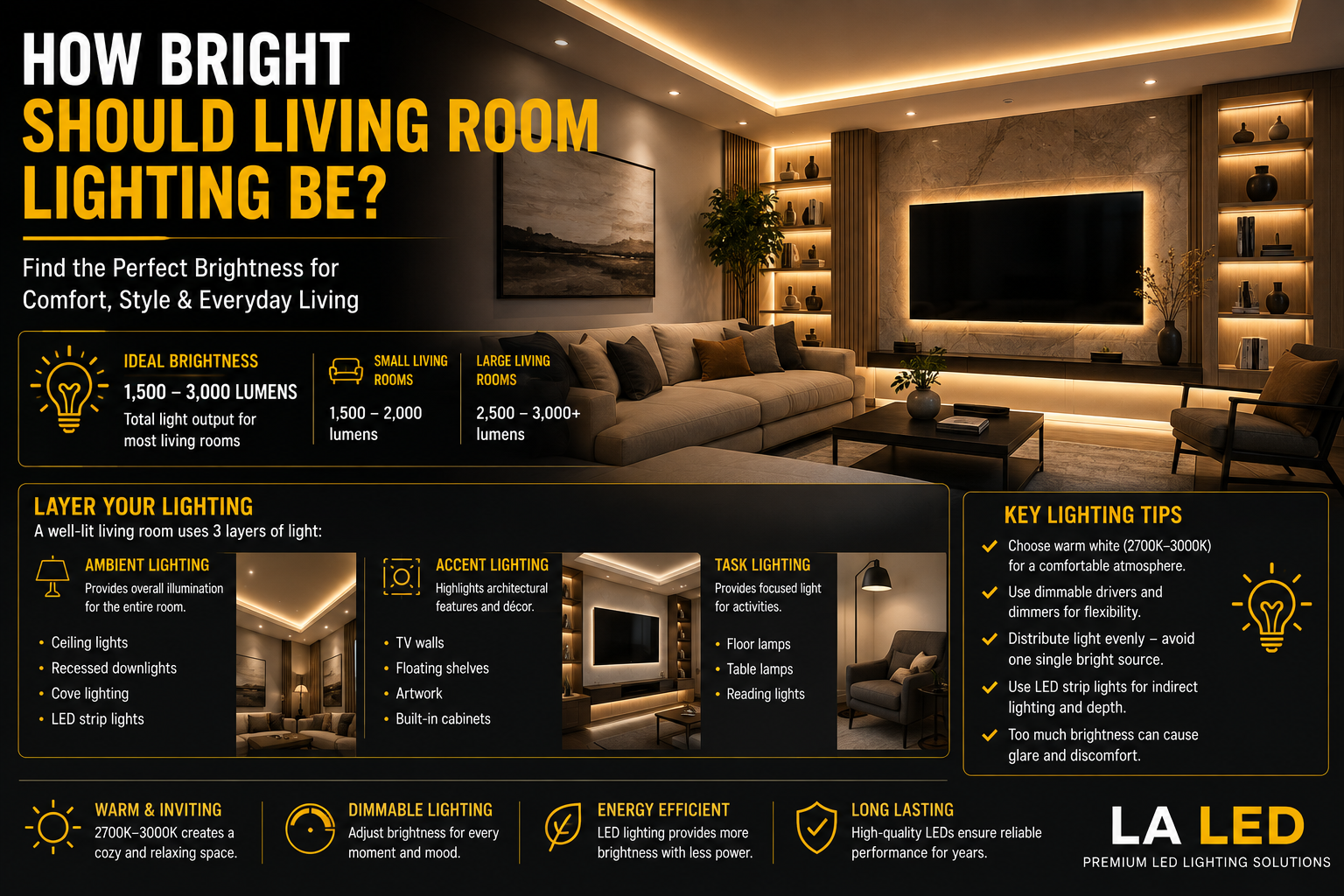
As a general guideline, living rooms typically require 1,500 to 3,000 lumens of total light output.
Smaller living rooms may only need around 1,500–2,000 lumens, while larger open-concept spaces often benefit from 2,500–3,000 lumens or more.
Instead of concentrating all the brightness in one location, it's best to distribute light throughout the room using several light sources.
Layer Your Lighting
Professional interior designers rarely depend on a single fixture.
A luxury living room usually combines three types of lighting:
Ambient Lighting
Ambient lighting provides the overall illumination for the room.
Examples include:
- Ceiling fixtures
- Recessed downlights
- Cove lighting
- LED strip lights hidden around the ceiling perimeter
This creates a soft, comfortable foundation for the entire space.
Accent Lighting
Accent lighting highlights architectural details and decorative features.
Popular applications include:
- Floating shelves
- TV walls
- Built-in cabinets
- Fireplaces
- Artwork
- Wall niches
LED strip lights are one of the easiest ways to create elegant accent lighting without visible fixtures.
Task Lighting
Task lighting is used for activities such as reading or hobbies.
Floor lamps, table lamps, and adjustable wall lights provide focused illumination exactly where it's needed.
Combining these three lighting layers creates depth and makes the room feel more luxurious.
Choosing the Right Color Temperature
Color temperature has a major impact on the atmosphere of a living room.
For most homes:
- 2700K creates a warm, cozy atmosphere.
- 3000K offers a slightly brighter but still inviting appearance.
- 4000K provides a more neutral look that's common in modern interiors.
Warm white lighting between 2700K and 3000K remains the most popular choice because it creates a relaxing environment without feeling overly yellow.
Dimmable Lighting Makes a Big Difference
The living room is used differently throughout the day.
Bright lighting may be ideal for cleaning or family activities, while softer lighting is perfect for watching movies or entertaining guests.
Installing dimmable LED drivers and compatible dimmers allows you to adjust brightness instantly without changing fixtures.
This flexibility is one of the easiest ways to make your living room feel more comfortable.
Use LED Strip Lights to Add Depth
LED strip lights have become a favorite among interior designers because they create indirect lighting that makes rooms appear larger.
Popular locations include:
- Ceiling coves
- Behind televisions
- Floating shelves
- Entertainment centers
- Built-in bookcases
- Under cabinets
- Stair edges leading into the living room
Hidden lighting adds depth while eliminating harsh glare.
Avoid Overlighting
A common mistake is installing lighting that's much brighter than necessary.
Too much brightness can make a living room feel cold and uncomfortable.
Instead, aim for balanced illumination using multiple light sources with adjustable brightness.
Soft indirect lighting often creates a more luxurious appearance than one extremely bright ceiling fixture.
Improve Energy Efficiency
Modern LED lighting provides excellent brightness while consuming far less electricity than traditional bulbs.
High-quality LED strip lights also offer:
- Long lifespan
- Consistent brightness
- Smooth dimming
- Low heat generation
- Reduced maintenance
This makes LED lighting an excellent investment for both new homes and remodeling projects.
Final Thoughts
The ideal living room isn't simply bright—it's balanced.
Using layered lighting, warm color temperatures, dimmable controls, and strategically placed LED strip lights creates a space that's comfortable, functional, and visually appealing.
Whether you're remodeling your home or updating your existing lighting, choosing the right brightness can completely transform your living room into a warm and welcoming place you'll enjoy every day.
FAQ
How many lumens should a living room have?
Most living rooms require between 1,500 and 3,000 lumens, depending on room size and natural light.
What color temperature is best for a living room?
Warm white lighting between 2700K and 3000K creates the most comfortable and inviting atmosphere.
Are LED strip lights good for living rooms?
Yes. LED strip lights are ideal for ceiling coves, TV walls, floating shelves, and accent lighting because they create soft indirect illumination.
Should living room lighting be dimmable?
Absolutely. Dimmable lighting allows you to adjust brightness for relaxing, entertaining, reading, or watching movies.
Can lighting make a living room feel bigger?
Yes. Indirect LED lighting, ceiling cove lighting, and layered illumination create depth and make a room appear larger.