
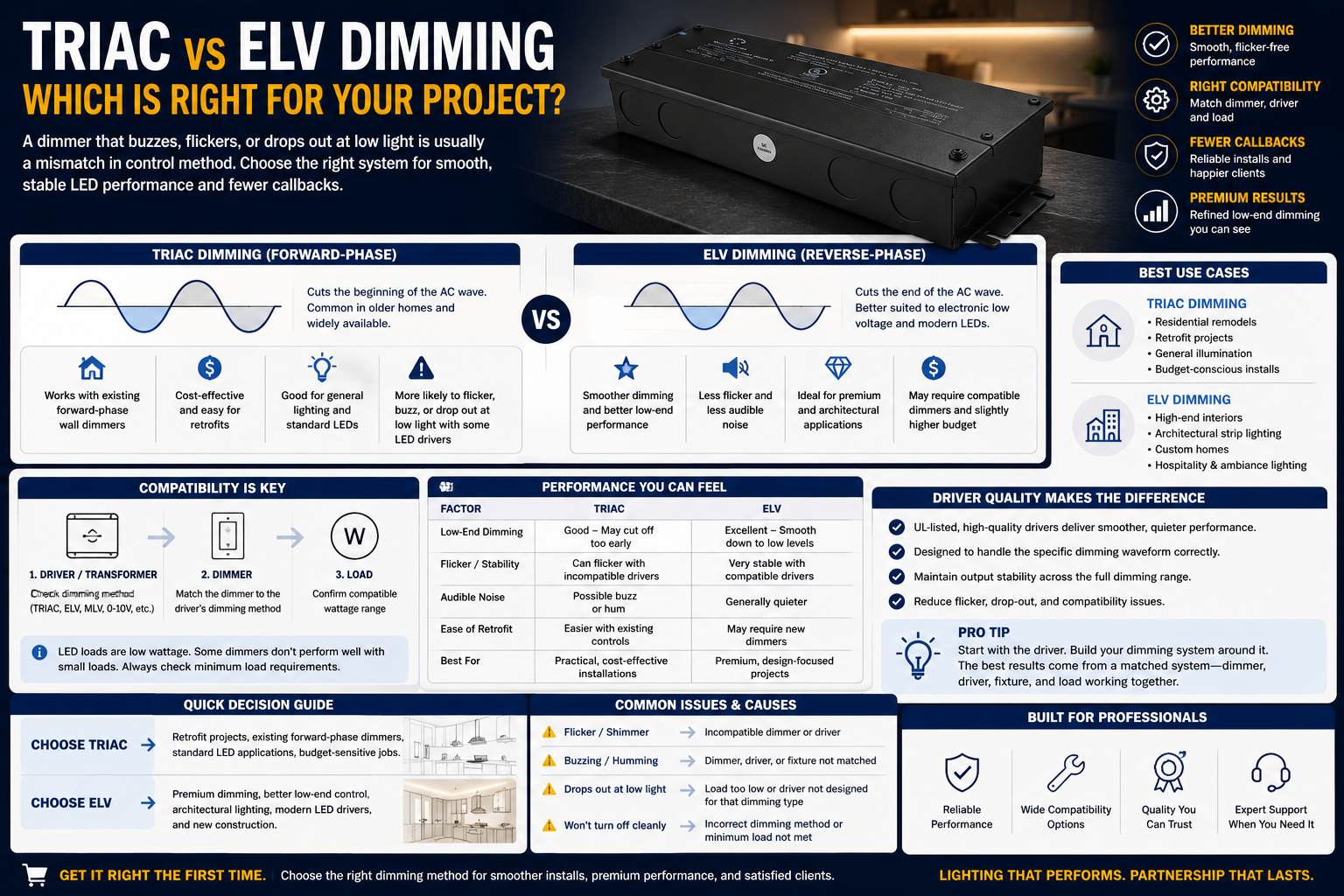
TRIAC vs ELV Dimming: Which Is Better for LED Lighting?
Flickering lights, buzzing dimmers, and poor low-end performance are often caused by one thing: incompatible dimming controls. When comparing TRIAC vs ELV dimming, the real question is which system will provide the smoothest and most reliable performance for your LED lighting.
The answer depends on the driver, fixture, dimmer, and overall system design.
What Is the Difference Between TRIAC and ELV Dimming?
TRIAC dimming uses forward-phase control and was originally designed for incandescent and halogen lighting. It remains one of the most common dimming methods because many homes already have compatible wall dimmers installed.
ELV (Electronic Low Voltage) dimming uses reverse-phase control and is designed to work more effectively with modern electronic drivers and LED lighting systems.
While both methods can dim LEDs, they are not interchangeable. A driver must be specifically designed to support the dimming method being used.
TRIAC vs ELV Dimming for LED Lighting
Both dimming methods can perform well when properly matched to compatible LED drivers.
TRIAC Dimming
TRIAC is often the preferred option for:
- Residential remodels
- Retrofit projects
- Existing wall dimmer installations
- General-purpose LED lighting
- Budget-conscious projects
A quality TRIAC-compatible driver can provide dependable dimming performance without changing the existing control setup.
However, some LED systems may experience:
- Flickering at low levels
- Pop-on behavior
- Limited dimming range
- Audible buzzing
- Dead travel on the dimmer
These issues are typically caused by compatibility problems rather than TRIAC technology itself.
ELV Dimming
ELV dimming is often preferred for:
- High-end residential projects
- Architectural lighting
- Under-cabinet lighting
- LED strip lighting
- Custom homes
- Premium commercial spaces
Because ELV was designed for electronic loads, it often delivers:
- Smoother low-end dimming
- Better stability
- Less flicker
- Reduced audible noise
- More refined control
When paired with compatible LED drivers, ELV typically provides a more polished dimming experience.
Where TRIAC Makes the Most Sense
TRIAC is often the easiest solution for retrofit projects because existing wall controls can frequently remain in place.
If the LED driver is specifically rated for TRIAC dimming, the installation can be simple, cost-effective, and reliable.
For many kitchens, hallways, bedrooms, and general lighting applications, a properly matched TRIAC system performs very well.
Where ELV Is the Better Choice
ELV is usually the stronger option when dimming quality is a priority.
It works especially well with:
- LED strip lights
- COB tape lighting
- Cove lighting
- Millwork lighting
- Toe-kick lighting
- Luxury residential projects
In these applications, smoother dimming and improved low-end performance are often noticeable immediately.
Compatibility Matters More Than the Dimmer Type
One of the biggest mistakes is assuming that any dimmable LED product will work with any dimmer.
Before selecting a dimmer, verify:
- Driver compatibility
- Fixture requirements
- Load range
- Dimming protocol
- Manufacturer recommendations
The driver should always determine the dimming method—not the other way around.
A premium LED strip light paired with an incompatible driver can still produce flicker, buzzing, or poor dimming performance.
Why Driver Quality Matters
The driver plays a major role in dimming performance.
A high-quality, UL-listed LED driver helps deliver:
- Stable output
- Smooth dimming curves
- Reduced flicker
- Better low-end performance
- Longer system life
Good dimming is not created by the dimmer alone. It requires the dimmer, driver, and LED load to work together as a complete system.
Installation and Retrofit Considerations
For existing homes and offices, TRIAC often wins because it works with many existing wall controls and requires fewer changes.
ELV may require compatible dimmers and additional planning, but it often delivers superior results in new construction and high-end remodels.
When dimming quality is a priority, specifying ELV-compatible drivers and controls from the beginning can prevent performance issues later.
Which Dimming Method Should You Choose?
Choose TRIAC if:
- You're working on a retrofit project
- Existing dimmers are already installed
- Cost is a primary concern
- The driver supports forward-phase dimming
Choose ELV if:
- You want smoother low-end dimming
- The project uses premium LED lighting
- You're installing architectural or strip lighting
- Dimming quality is a key design feature
Final Thoughts
When it comes to TRIAC vs ELV dimming, there is no universal winner. The best choice depends on the driver, fixture, controls, and project requirements.
For retrofit projects, TRIAC often provides a practical and cost-effective solution. For high-end residential and architectural lighting, ELV frequently delivers superior dimming performance and a more refined user experience.
The safest approach is to select the LED driver first, then choose the dimming method designed to work with it. When all components are matched correctly, the result is smooth, reliable lighting that performs exactly as expected.