
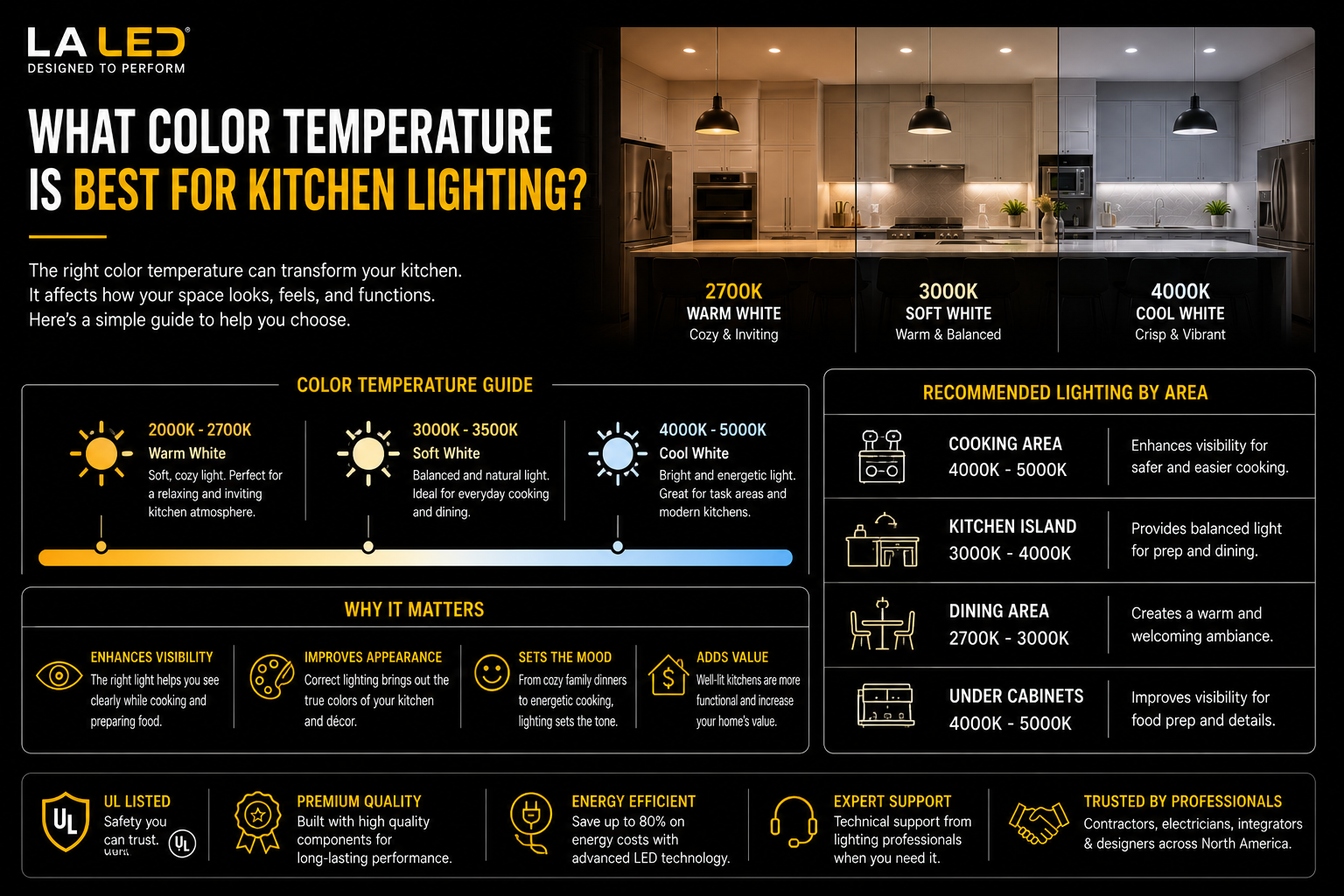
What Color Temperature Is Best for Kitchen Lighting?
A beautiful kitchen can have premium cabinets, expensive countertops, and designer fixtures, yet still feel disappointing when the lights come on. The wrong color temperature can make cabinets appear flat, countertops look dull, and everyday tasks feel more difficult than they should.
So, what color temperature is best for kitchen lighting?
For most residential kitchens, 3000K to 3500K provides the best balance of warmth, visibility, and overall appearance. Some kitchens benefit from 2700K for a softer, more inviting atmosphere, while 4000K can be useful in task-focused or commercial-style environments.
The right choice depends on how the kitchen is used, the finishes in the space, and whether the lighting system uses fixed or tunable color temperatures.
The Best Color Temperature for Most Kitchens
For the majority of homes, 3000K is the ideal starting point.
This warm white light feels comfortable and welcoming while still providing excellent visibility for cooking, cleaning, and everyday activities. It complements popular materials such as:
-
White cabinetry
-
Natural wood finishes
-
Quartz countertops
-
Marble surfaces
-
Brushed metal hardware
A 3000K lighting system feels residential and upscale without appearing yellow or outdated.
If you want one recommendation that works in most kitchens, choose 3000K.
When 3500K Makes More Sense
For modern kitchens, 3500K often provides the perfect balance between warmth and clarity.
This slightly cooler white light delivers:
-
Better visual contrast
-
Improved task visibility
-
A cleaner architectural appearance
-
Enhanced definition on white and gray finishes
3500K works particularly well in kitchens featuring:
-
White cabinets
-
Black accents
-
Contemporary designs
-
Professional-style appliances
-
Minimalist interiors
Many designers consider 3500K the sweet spot for upscale contemporary kitchens.
Understanding Kelvin Ratings
Color temperature is measured in Kelvin (K).
Lower numbers appear warmer and more inviting.
Higher numbers appear cooler and more task-oriented.
2700K
-
Warm and cozy
-
Similar to traditional incandescent lighting
-
Excellent for decorative lighting
-
Works well with rich wood tones
3000K
-
Warm white
-
Most versatile residential option
-
Excellent balance of comfort and visibility
-
Ideal for open-concept homes
3500K
-
Clean neutral white
-
Modern appearance
-
Great for kitchens and workspaces
-
Strong task lighting performance
4000K
-
Cool white
-
Bright and highly functional
-
Common in commercial applications
-
Excellent visibility but can feel less inviting
Best Color Temperature for Under-Cabinet Lighting
Under-cabinet lighting plays a different role than ceiling fixtures.
Because it directly illuminates countertops and work surfaces, color temperature becomes even more important.
For most kitchens, the best under-cabinet lighting options are:
-
3000K
-
3500K
These temperatures provide excellent visibility while maintaining a comfortable residential appearance.
High-quality COB LED strip lights are especially popular because they create a smooth, dotless line of light that looks clean and professional.
Recommended Product
For premium under-cabinet lighting, explore our collection of:
COB LED Strip Lights
https://laledlighting.com/collections/cob-led-strip-lights
COB strips provide:
-
Dotless illumination
-
Excellent countertop visibility
-
Smooth dimming performance
-
Professional architectural appearance
How Kitchen Finishes Affect Color Temperature
The same color temperature can look very different depending on the materials in the room.
White Cabinets
Both 3000K and 3500K typically perform well.
2700K can make white finishes appear slightly cream-colored.
Natural Wood Cabinets
Warm wood tones generally look best under:
-
2700K
-
3000K
These temperatures help preserve richness and depth.
Gray and Modern Finishes
Gray cabinetry, black hardware, and contemporary surfaces often benefit from:
-
3500K
-
4000K (in select applications)
These temperatures create sharper contrast and a cleaner appearance.
Fixed White vs Tunable White Lighting
Some homeowners prefer a single color temperature throughout the day.
Others want flexibility.
Tunable white lighting allows users to adjust color temperature depending on the time of day or activity.
For example:
-
Brighter, cooler light for cooking and cleaning
-
Warmer light for dining and entertaining
This approach works especially well in:
-
Large kitchens
-
Open-concept homes
-
Luxury remodels
-
Smart home systems
To achieve smooth performance, the system should use compatible controllers, drivers, and dimming equipment.
Common Kitchen Lighting Mistakes
Confusing Brightness with Color Temperature
A common misconception is that 4000K is brighter than 3000K.
Color temperature affects appearance, not actual brightness.
Brightness is determined by lumen output.
Mixing Too Many Color Temperatures
Using:
-
2700K pendants
-
4000K under-cabinet lights
-
3000K recessed fixtures
can make a kitchen feel inconsistent and poorly planned.
Lighting layers should work together rather than compete with each other.
Ignoring Dimming Compatibility
Even perfect color temperature selection can disappoint if the lighting system flickers or dims poorly.
High-quality drivers and compatible dimming controls are essential for smooth, reliable performance.
The Best Kitchen Lighting Recommendation
If you need a dependable starting point:
-
Choose 3000K for most residential kitchens.
-
Choose 3500K for modern and task-oriented kitchens.
-
Use 2700K when warmth and ambiance are the priority.
-
Use 4000K selectively for commercial or utility-focused spaces.
For under-cabinet lighting, high-quality COB LED strip lights in 3000K or 3500K typically provide the best results.
Final Thoughts
The best kitchen lighting should feel natural, make surfaces easy to work on, and enhance the appearance of the entire room. For most homes, 3000K delivers the ideal balance of warmth and function, while 3500K provides a cleaner and more contemporary look.
When paired with quality LED strip lighting, compatible dimmable drivers, and proper installation, the right color temperature can transform a kitchen from simply functional to truly exceptional.