
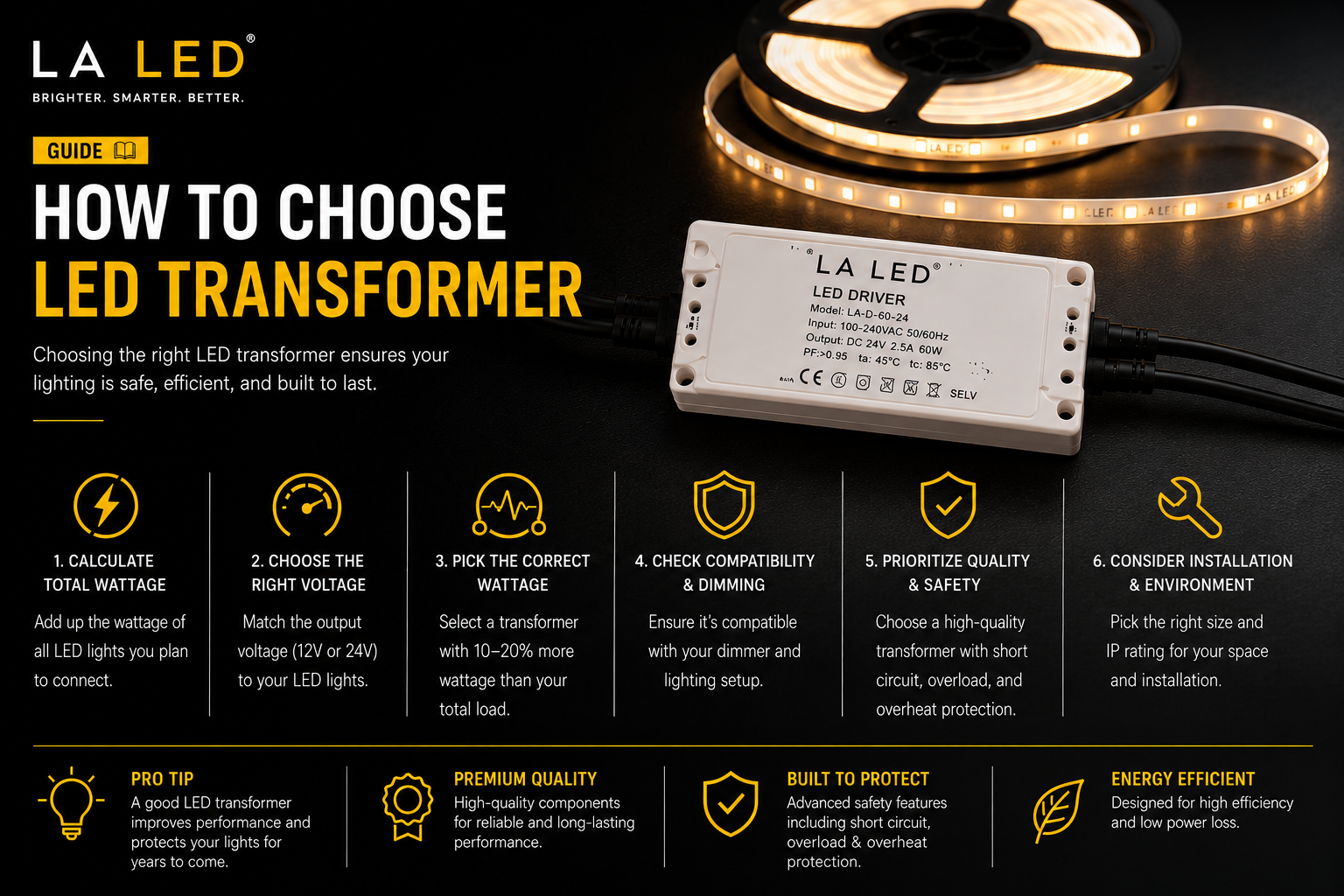
A transformer that is too small does not fail gracefully. It flickers, runs hot, trips early, or shortens the life of the LEDs connected to it. If you are figuring out how to choose LED transformer options for a strip light run, a cabinet lighting job, or an outdoor install, the right answer comes down to four things: voltage, wattage, dimming method, and installation environment.
That sounds simple until the project includes longer tape light runs, wet-location mounting, RGBW controls, or a homeowner who wants smooth dimming from an existing wall switch. This is where many buyers get tripped up. The transformer is not just a box that powers the lights. It has to match the electrical requirements of the LEDs and the real conditions of the jobsite.
How to choose LED transformer for your project
Start with the LED product, not the transformer. Every reliable selection begins with the load requirements of the fixture or strip light you are powering. Check the product specs for input voltage, total wattage, and whether the load is constant voltage or constant current.
Most LED strip lighting projects use constant voltage power, typically 12V or 24V DC. Many recessed fixtures and specialty LED modules use a driver instead, often with constant current output. That distinction matters. If the light requires a driver, a standard transformer is the wrong component. If the light is designed for low-voltage tape lighting, under-cabinet lighting, landscape lighting, or architectural accent runs, then selecting the correct transformer becomes the next step.
For strip lights especially, you should also confirm whether the product is single color, tunable white, RGB, or RGBW. Advanced lighting systems may require a transformer plus a compatible controller. Powering the strip is only part of the system.
Match the output voltage exactly
Voltage is not a flexible spec. A 12V LED product needs a 12V power source. A 24V LED product needs 24V. Using the wrong output voltage can damage the LEDs or cause immediate performance issues.
This is one of the fastest ways to rule products in or out. If your tape light is 24V DC, choose a transformer with a 24V DC output. Do not assume a transformer is universal just because it is sold for LED use.
There is also a practical side to voltage selection. For longer runs, 24V systems usually perform better because they reduce voltage drop compared with 12V systems. That can matter in large rooms, ceiling coves, commercial spaces, and outdoor applications where the distance from transformer to lighting load is longer.
Size for wattage with headroom
Once voltage is matched, calculate the total load. Add up the wattage of every LED fixture or every foot of strip light connected to that transformer. Then add safety headroom.
A good working rule is to size the transformer at about 20 percent above the actual load. If your total connected load is 80 watts, a 96W unit may technically work, but many professionals would move up to 100W or 120W depending on the product category and installation conditions. That extra capacity helps the transformer run cooler and more reliably over time.
This matters even more with enclosed spaces, warmer environments, and projects that run for long periods each day. A transformer operating at its limit may not fail right away, but it is more likely to run hotter, wear faster, and deliver inconsistent performance.
For example, if you are installing 16 feet of strip lighting at 5 watts per foot, your load is 80 watts. A 100W transformer gives you a more dependable margin than an 80W unit. If the install includes control gear or expansion later, sizing up can save time and replacement costs.
Dimming compatibility is where many mistakes happen
If the LEDs need to dim, the transformer has to support the same dimming method as the control system. This is where people often buy a perfectly good transformer that is completely wrong for the application.
Common dimming types include TRIAC, ELV, MLV, and 0-10V. These are not interchangeable. A dimmable wall switch and a dimmable transformer still have to be compatible with each other and with the LED load.
For residential retrofits, TRIAC and ELV are common. For commercial settings, 0-10V is frequently the better fit. MLV comes up in certain low-voltage systems, especially where older infrastructure exists. If you are working with premium dimmable strip lighting or architectural LEDs, checking the full compatibility chain is essential.
Smooth dimming depends on the transformer, the dimmer, and the LED product all speaking the same electrical language. If one part is mismatched, you may see flickering, drop-out at low dim levels, buzzing, or limited dimming range. That is why experienced installers do not treat dimming as an afterthought.
Transformer or driver - know which one you need
Buyers often use these terms interchangeably, but they are not always the same thing. In many tape light applications, people say transformer when they mean a low-voltage LED power supply. In other applications, especially with integrated fixtures and downlights, the correct component is an LED driver.
The safe approach is to follow the fixture specification exactly. If the product calls for a constant voltage power supply, choose that. If it calls for a constant current driver, use the specified driver. The wrong power source can reduce performance or damage the product.
For more advanced lighting systems, the setup may include a dimmable driver, a separate controller, or a junction-box style power unit rated for specific locations. Compact units can be useful where space is tight, but the enclosure rating still needs to match the job.
Think about location, not just electrical specs
A transformer that works indoors in a dry utility area may be the wrong choice for a soffit, bathroom, garage, or landscape installation. You need to consider whether the unit is rated for dry, damp, or wet locations and whether it will be exposed to heat, limited airflow, or weather.
Outdoor and landscape projects are especially unforgiving. Moisture, temperature swings, and long wire runs all affect performance. A compact transformer with junction box protection can be a smart option where code compliance and environmental protection matter.
Indoor projects also have real-world constraints. Under-cabinet lighting may require a low-profile unit. Closet shelving, millwork, and floating vanities often leave very little room for power components. In these cases, physical size, ventilation, and access for service are just as important as electrical capacity.
Wire run distance affects performance
If the transformer is mounted far from the LED load, voltage drop becomes part of the selection process. This is more noticeable with 12V systems and longer cable runs. Symptoms can include uneven brightness, dimmer light at the far end, or color inconsistency in tape lights.
You can reduce those issues by using 24V products where appropriate, shortening the distance between transformer and load, increasing wire gauge, or splitting the run across multiple power feeds. The right fix depends on the size and layout of the project.
This is one reason professionals often plan the transformer location early instead of treating it as an afterthought. A clean lighting layout on paper can still underperform if the power placement is poor.
Quality, certification, and project type matter
Not all LED transformers are built to the same standard. For residential remodels, commercial interiors, and upscale custom work, reliability matters more than chasing the cheapest power supply on the page.
Look for products that are UL listed or otherwise clearly compliant with US standards. Certified components help protect the installation, simplify approval, and support long-term performance. This is especially important for contractors, electricians, and remodelers who cannot afford callback issues caused by unstable power.
It also makes sense to match product quality to the project level. A basic cabinet upgrade may have different demands than a high-end Los Angeles home with dimmable COB strip lighting, tunable white zones, and custom millwork. Premium LED systems deserve power components that can support consistent output and dependable dimming without compromise.
LA LED Lighting focuses heavily on these compatibility and certification details because they directly affect results in the field.
A practical way to choose the right unit
If you want the fastest path to the correct product, work through the decision in this order: identify the LED type, confirm 12V or 24V output, calculate total wattage, add headroom, verify dimming protocol, then check location rating and physical size. That process catches most specification errors before they become installation problems.
If the project includes RGB, RGBW, CCT, or smart control features, also confirm controller compatibility and whether the power supply is sized for the full system load. Color-changing installs often involve more than just matching voltage and watts.
The best transformer is not the largest one and not the cheapest one. It is the one that fits the load, the controls, the environment, and the expectations of the job. Get those four things right, and the lighting will do what it is supposed to do - look clean, perform reliably, and stay that way long after install day.