
If you have ever installed color-changing LED tape and then felt underwhelmed by the white setting, you already understand the real question behind rgb vs rgbw lighting. It is not just about adding one more letter. It is about whether the system can deliver clean white light when the project needs task lighting, accent lighting, or a polished architectural finish.
For contractors, installers, and homeowners who want dependable results, the difference matters early in the planning stage. It affects the strip selection, controller choice, wiring layout, power requirements, and the overall look of the finished space. Choosing the right format up front saves time, avoids callbacks, and produces a better lighting result.
RGB vs RGBW lighting: the core difference
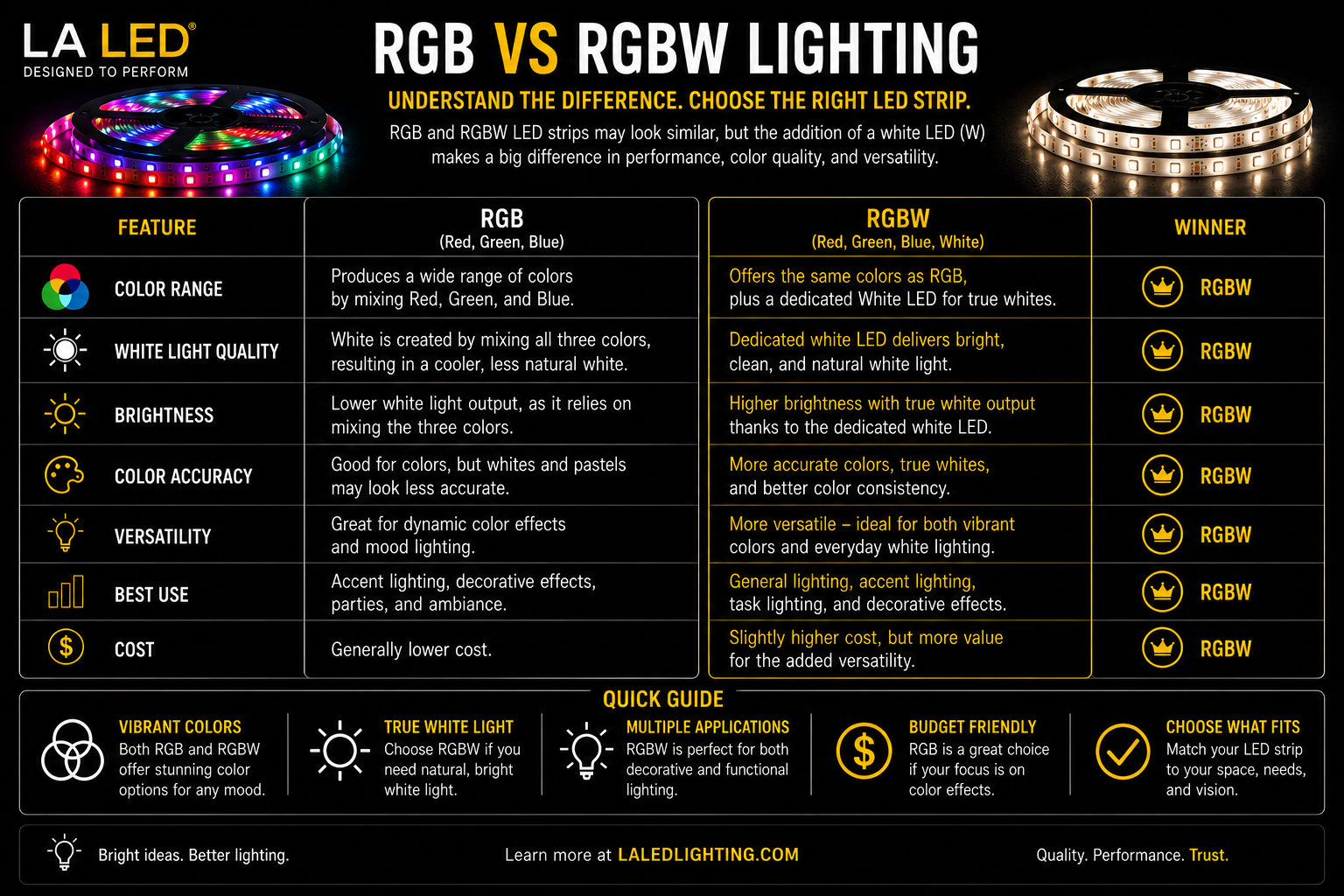
RGB uses red, green, and blue LEDs to mix colors. That setup is built for decorative effects, scene changes, and saturated color output. It can create a version of white by blending the three colors together, but that white is usually less accurate and less comfortable than a dedicated white LED channel.
RGBW adds a separate white diode alongside the red, green, and blue chips. That extra channel is the main advantage. Instead of forcing the fixture to simulate white from color mixing, RGBW can produce a true white output while still delivering full color effects.
In practice, that means RGB is often enough when the goal is pure entertainment lighting, backlighting, or occasional color accents. RGBW makes more sense when the same fixture needs to handle both color and usable white illumination.
Why RGB white often falls short
On paper, RGB can make white. In the field, it usually makes a compromise.
When an RGB strip mixes red, green, and blue to appear white, the result can look cool, uneven, or slightly tinted. It may be acceptable behind a TV, under a bar counter, or in a game room where color is the priority. It is less convincing in kitchens, offices, display shelving, or outdoor architectural applications where clean white light helps define the space.
This is where project expectations matter. If the client wants dramatic color at night but also wants the cove, under-cabinet, or soffit lighting to function like normal white lighting during everyday use, RGB alone often disappoints. RGBW solves that issue by separating decorative color from practical white output.
The benefit of a dedicated white channel
A dedicated white channel does three things. First, it improves white light quality. Second, it allows better efficiency when the fixture is being used in white mode. Third, it gives more flexibility in design because you are not sacrificing one function for another.
That flexibility is especially valuable in premium residential installs and commercial spaces where lighting has to look intentional, not improvised. A dedicated white channel helps the system feel architectural rather than novelty-driven.
Where RGB lighting makes the most sense
RGB still has a place, and in the right application it is the smarter buy.
If the project is centered on color effects, holiday displays, media rooms, hospitality accents, or entertainment zones, RGB can be a cost-effective solution. It generally uses simpler hardware than RGBW, and for applications where white quality is not the priority, it performs well.
For example, toe-kick lighting in a game room, floating shelf accents in a lounge, or perimeter glow lighting around a patio feature wall may only need strong color scenes and occasional dimmed output. In those cases, RGB can cover the brief without adding cost for a dedicated white channel that may rarely be used.
RGB also works well when the install budget is tight and the buyer understands the trade-off. It delivers the fun part of dynamic lighting without pretending to be a complete white-light solution.
Where RGBW lighting earns the upgrade
RGBW is the better choice when the lighting system needs to do more than change colors.
Under-cabinet lighting is a good example. Homeowners may want warm white or neutral white for cooking and cleaning, then shift to color for entertaining. A dedicated white LED channel gives them both options in one fixture. The same is true for coves, built-ins, reception desks, outdoor hardscape details, and retail displays.
In commercial and high-end residential work, RGBW often delivers a cleaner final result because it supports layered lighting design. The white light can handle everyday visibility and comfort, while the color channels remain available for scenes, mood changes, or event use.
That dual-purpose performance is why RGBW is often the better long-term value. The upfront cost is higher, but the fixture is more versatile, more usable, and less likely to be replaced after the client realizes they want better white light.
Control, wiring, and system planning
One of the biggest differences in rgb vs rgbw lighting is not visible once the install is complete. It shows up in the planning.
RGB systems typically use three color channels plus a common positive or negative depending on the product design. RGBW adds another channel for white. That means you need a compatible RGBW controller, and you need to account for the correct number of conductors, connectors, and control outputs.
For professionals, this is routine. For DIY buyers, this is where mistakes happen. An RGB strip cannot be fully controlled by an RGBW controller in the same way if the strip and controller specifications do not match, and an RGBW strip obviously needs hardware built for four channels of output plus common wiring. The driver or transformer sizing must also reflect the actual wattage load, not a rough guess.
If the system will be dimmed, integrated with wall controls, or paired with smart control hardware, compatibility becomes even more important. The lighting only performs as well as the full system behind it.
Power draw and voltage still matter
RGBW strips can draw more power than RGB strips because they include an additional LED channel. That does not automatically make them inefficient, but it does mean power calculations must be accurate. Voltage drop, run length, and wire gauge still need to be handled correctly, especially on longer tape light installations.
For indoor and outdoor projects alike, matching the right strip with the right driver, controller, and installation accessories is what separates a clean, reliable result from a service call.
Which looks better in finished spaces?
If the question is pure color impact, either format can look impressive when the product quality is strong. If the question is which looks better in a finished everyday environment, RGBW usually wins.
That is because most spaces are not used in color mode all day. Kitchens, offices, hallways, living rooms, and landscape features spend far more time in white light than many buyers expect. Once the novelty of color wears off, people want lighting that feels comfortable, flattering, and useful.
RGBW handles that transition better. It gives the installer and end user a more complete system, especially in spaces where lighting has both decorative and functional roles.
How to choose between RGB and RGBW
Start with the actual use case, not the product label.
If the goal is entertainment lighting, accent color, or low-cost dynamic effects, RGB may be the right fit. If the project needs real white light for daily use, RGBW is the better answer. If the client says they want one lighting system that can create mood on weekends and still look clean on Monday morning, that is a strong signal to choose RGBW.
It also helps to think about who is using the system. Design-conscious homeowners, hospitality spaces, upscale remodels, and architectural applications usually benefit more from RGBW. Temporary displays, themed rooms, and budget-focused decorative installs often do fine with RGB.
At LA LED Lighting, this is where product quality and compatibility matter. Premium strip lighting, properly matched controllers, and reliable power components make the difference between lighting that looks impressive on day one and lighting that still performs the way it should months later.
The better question to ask
Instead of asking whether RGB or RGBW is better in general, ask what the lighting needs to do when the color effects are turned off. That answer usually points you in the right direction.
If white light quality matters, do not force an RGB system to do a job it was never meant to do. If the project is all about color and atmosphere, RGB may be exactly enough. The smartest lighting choice is the one that fits the application, installs cleanly, and performs reliably long after the switch is turned on.